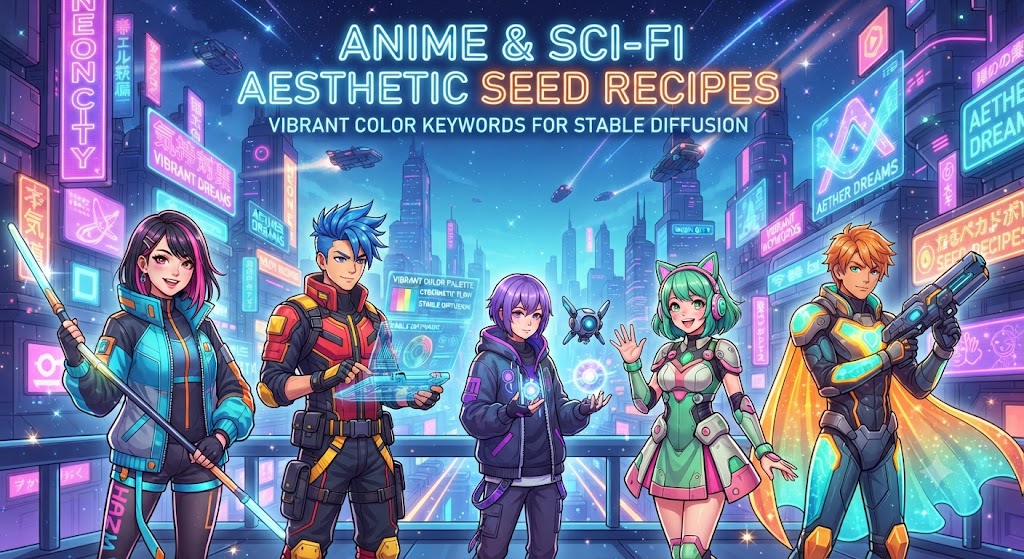
Anime & Sci-Fi Aesthetic Seed Recipes: Vibrant Color Keywords for Stable Diffusion
The visual impact of modern Japanese animation and high-concept science fiction is defined by bold chromatic decisions. From the luminous, hyper-saturated sky gradients of Makoto Shinkai films to the mechanical armor accents of classic 90s mecha series like Neon Genesis Evangelion and Ghost in the Shell, color is used deliberately to evoke raw emotion, scale, and futuristic technological momentum.
However, when generating anime and sci-fi visuals in generative engines such as Stable Diffusion (SDXL, Pony Diffusion, Animagine XL) and Midjourney, artists frequently encounter a common obstacle: images either become muddy and oversaturated with plastic-looking artifacts, or default to generic desaturated gray palettes. In this comprehensive technical guide, we break down anime color chemistry, analyze the specific vocabulary tokens that trigger authentic animation cell lighting, present five production-grade palette recipes with exact HEX anchors, and provide copy-paste prompt formulas engineered for high-end digital creators.
1. The Chemistry of Modern Anime Color Schemes
Unlike Western digital painting which often leans toward earthy blending and low-contrast values, Japanese animation background art relies on high local luminance paired with crisp cell-shaded line boundaries.
The Makoto Shinkai Sky Dynamics
The hallmark of modern cinematic anime is the multi-layered atmosphere. Instead of rendering a flat blue sky, studio background artists paint dynamic multi-chroma gradations:
- Atmospheric Zeniths: Deep royal cerulean transitioning into vibrant turquoise (
#00C4FF). - Cloud Edge Scatters: Golden apricot (
#FFB347) and radiant magenta highlights along cloud rims, simulating strong solar refraction. - Ground Ambient Shadows: Reflected lavender mist and deep indigo, avoiding pure black tones to maintain high emotional warmth.
Retro 90s Mecha & Cel-Shading Mechanics
In contrast to soft modern anime gradients, vintage 1990s mecha relies on bold, non-dithered color blocking. Primary reds, deep cobalt blues, and warning ambers are separated by sharp ink lines and dark metallic gunmetal undercarriages. Controlling this aesthetic in AI models requires prompt tokens that command hard edge termination and high pigment density.
2. Five Production-Grade Color Recipes (With Exact HEX Tokens)
Below are five production color sets tailored for specific animation genres, sci-fi concepts, and digital UI themes.
Recipe 1: Shinkai Twilight Horizon (Atmospheric Romance)
A classic sunset-into-night gradient featuring glowing golden clouds set against twilight purple and turquoise sky lanes.
| Role | Color Name | HEX Code | RGB Value |
|---|---|---|---|
| Sky Zenith | Luminous Cyan | #00F0FF | rgb(0, 240, 255) |
| Mid-Atmosphere | Electric Periwinkle | #6366F1 | rgb(99, 102, 241) |
| Cloud Rim | Twilight Orchid | #A855F7 | rgb(168, 85, 247) |
| Solar Flare | Sunset Apricot | #FB923C | rgb(251, 146, 60) |
| Ground Shadow | Deep Midnight Navy | #1E1B4B | rgb(30, 27, 75) |
Recipe 2: Cyber-Mecha Unit 01 (Bio-Mechanical Energy)
Aggressive, high-contrast toxic green and electric purple balance inspired by legendary Japanese bio-mecha anime.
| Role | Color Name | HEX Code | RGB Value |
|---|---|---|---|
| Energy Core | Radioactive Lime | #22C55E | rgb(34, 197, 94) |
| Armor Highlight | Acid Chartreuse | #84CC16 | rgb(132, 204, 22) |
| Primary Chassis | Vibrant Imperial Violet | #9333EA | rgb(147, 51, 234) |
| Shadowed Armor | Abyssal Plum | #3B0764 | rgb(59, 7, 100) |
| Mechanical Frame | Carbon Black Core | #09090B | rgb(9, 9, 11) |
Recipe 3: Neo-Metropolis Akira Red (Futuristic Dystopia)
The definitive dystopian cyberpunk palette: piercing laser crimson paired with harsh asphalt grays and dark cobalt.
| Role | Color Name | HEX Code | RGB Value |
|---|---|---|---|
| Signature Red | Laser Scarlet | #EF4444 | rgb(239, 68, 68) |
| Dark Blood Tone | Crimson Shade | #991B1B | rgb(153, 27, 27) |
| Hologram Accent | Electric Holo Sky | #38BDF8 | rgb(56, 189, 248) |
| Concrete Surface | Industrial Slate | #1E293B | rgb(30, 41, 59) |
| Deep Night | Abyssal Obsidian | #020617 | rgb(2, 6, 23) |
Recipe 4: Lofi Chillhop Afternoon (Sunlit Nostalgia)
Soft, warm, pastel-leaning palette reminiscent of quiet afternoon study sessions in Tokyo suburbs.
| Role | Color Name | HEX Code | RGB Value |
|---|---|---|---|
| Desk Sunlight | Golden Buttercup | #FDE047 | rgb(253, 224, 71) |
| Wood Tones | Warm Peach Amber | #FDBA74 | rgb(253, 186, 116) |
| Window Pothos | Soft Mint Sprout | #A7F3D0 | rgb(167, 243, 208) |
| Room Plaster | Subtle Paper Mist | #E2E8F0 | rgb(226, 232, 240) |
| Shadow Line | Dusty Indigo Pencil | #334155 | rgb(51, 65, 85) |
Recipe 5: Cyber-Idol Neon Hologram (Future Pop)
High-energy visual scheme pairing luminous magenta with iridescent turquoise for stage lighting and AI virtual avatar art.
| Role | Color Name | HEX Code | RGB Value |
|---|---|---|---|
| Laser Pink | Emissive Rose | #F43F5E | rgb(244, 63, 94) |
| Spotlight Glow | Bubblegum Orchid | #EC4899 | rgb(236, 72, 153) |
| Virtual Beam | Prismatic Cyan | #06B6D4 | rgb(6, 182, 212) |
| Stage Fill | Violet Beam | #8B5CF6 | rgb(139, 92, 246) |
| Arena Dark | Deep Stadium Navy | #0F172A | rgb(15, 23, 42) |
3. High-Weight Color Keywords for Stable Diffusion & Midjourney
Diffusion text encoders respond poorly to weak adjectives like “colorful” or “vibrant anime.” Instead, incorporate verified visual keywords that directly reference studio processes and specific rendering engines:
Verified Technical Prompt Modifiers
| Target Style | High-Weight Keywords to Include |
|---|---|
| Shinkai Sky / Clouds | cumulonimbus clouds, rayleigh scattering, volumetric sunbeams, vivid turquoise and apricot palette, painted background art by CoMix Wave Films |
| 90s Cel Anime | retro 1990s anime aesthetic, cel shading, high ink line density, vintage anime screencap, grain texture, vibrant solid pigments, studio trigger aesthetic |
| Holographic Sci-Fi | emissive edge refraction, chromatic dispersion, volumetric laser scan lines, bloom effect, glowing UI telemetry overlay |
| Lofi Cozy Anime | dappled afternoon window light, pastel anime watercolor palette, muted gouache textures, soft atmospheric bloom, warm analog feel |
4. Production Master Prompt Seeds (Ready to Copy-Paste)
Below are optimized, production-tested prompt seeds formatted for Stable Diffusion XL (SDXL) and Midjourney v6.
Master Seed 1: Shinkai Architectural Cloudscape
Master Seed 2: 90s Cyberpunk Mecha Hangar (Stable Diffusion XL)
Master Seed 3: Retro Cyber-Rider Night Ride (Flux.1 / Midjourney)
5. Negative Prompt Seeds: Preventing Muddy Color Blends
In Stable Diffusion workflows, what you subtract is just as critical as what you prompt. Anime models easily fall victim to muddy brown skin tones or dull desaturated backgrounds if the negative prompt lacks specific color barriers.
The Essential Anime Color Negative Stack
Always incorporate this standard negative color stack into your SDXL or WebUI configurations:
6. Final Production Checklist for Anime Color Control
- Separate sky zeniths from cloud rims using opposing warm-versus-cool color tokens.
- Use
cel shadingandsolid pigment fillkeywords to avoid plastic 3D CGI rendering artifacts. - Incorporate studio and medium names (e.g., CoMix Wave Films, painted gouache background, 90s anime cel) to steer neural weights.
- Always reinforce your output with an anti-desaturation negative prompt stack.
By treating color in anime prompts as structured lighting layers rather than random decorative tags, you can consistently generate vivid, emotionally evocative scenes that capture the true spirit of high-end cinematic animation.